


प्रश्न और उत्तर का अभ्यास करें
8 प्र:Read the following passage carefully and give the answer of following questions.
Art both reflects and interprets the notion that produced it. Portraiture was the dominant theme of British painting up to the end of the eighteenth century because of a persistent demand for it. It would be unfair to say that human vanity and pride of possessions were the only reasons for this persistent demand, but certainly these motives played their part in shaping the course of British painting. Generally speaking, it is the artist's enthusiasm that accounts for the vitality of the picture, but it is the client who dictates its subject-matter. The history of national enthusiasms can be pretty accurately estimated by examining the subject-matter of a nation's art.
There is one type of subject which recurs again and again in British painting of the late eighteenth century and the jart half of the nineteenth and which is hardly met with in the jart of any other country ---- the sporting picture, or rather the picture in which a love of outdoor life is directed into the channel of sport. The sporting picture is really an extension of the conversation piece. In it the emphasis is even more firmly based on the descriptive side of painting. It made severe demands on the artist and it must be-confessed that painters capable of satisfying these demands were rare. The ability to paint a reasonably convincing landscape is not often combined with the necessary knowledge of horses and dogs in movement and the power to introduce a portrait when necessary. To weld such diverse elements into a satisfactory aesthetic unity requires exceptional ability. It is not surprising, therefore, that while sporting pictures abound in England, especially in the private collections of country squires, not many of them are of real importance as works of art. What makes the sporting picture worth noting in, a history of British painting is the fact that it is as truly indigenous and as truly popular a form of art in England as was the religious ikon in Russia.
Persistent demand for portraiture could be found
1104 05f3a225bc306f54abecd16f0
5f3a225bc306f54abecd16f0There is one type of subject which recurs again and again in British painting of the late eighteenth century and the jart half of the nineteenth and which is hardly met with in the jart of any other country ---- the sporting picture, or rather the picture in which a love of outdoor life is directed into the channel of sport. The sporting picture is really an extension of the conversation piece. In it the emphasis is even more firmly based on the descriptive side of painting. It made severe demands on the artist and it must be-confessed that painters capable of satisfying these demands were rare. The ability to paint a reasonably convincing landscape is not often combined with the necessary knowledge of horses and dogs in movement and the power to introduce a portrait when necessary. To weld such diverse elements into a satisfactory aesthetic unity requires exceptional ability. It is not surprising, therefore, that while sporting pictures abound in England, especially in the private collections of country squires, not many of them are of real importance as works of art. What makes the sporting picture worth noting in, a history of British painting is the fact that it is as truly indigenous and as truly popular a form of art in England as was the religious ikon in Russia.
- 1in the early eighteenth centuryfalse
- 2in the late eighteenth centuryfalse
- 3up to the end of the eighteenth centurytrue
- 4before the end of the eighteenth centuryfalse
- उत्तर देखेंउत्तर छिपाएं
- Workspace
- SingleChoice
उत्तर : 3. "up to the end of the eighteenth century"
प्र:निर्देश: निम्नलिखित पाई चार्ट 2010 में भारत से विभिन्न खाद्यान्नों के निर्यात को दर्शाता है। चार्ट का अध्ययन करें और प्रश्नों के उत्तर दें:
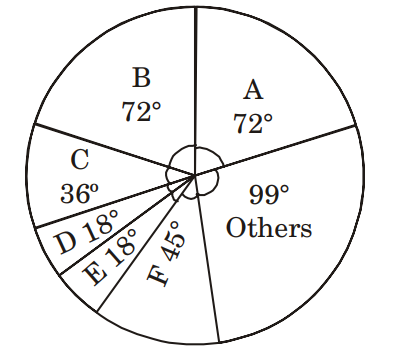
यदि कुल 1.5 मिलियन क्विंटल फसल F का निर्यात किया गया था, तो निर्यात की गई D और E की कुल मात्रा (मिलियन क्विंटल में) थी
1104 063be6b4261d62119f1db985c
63be6b4261d62119f1db985c- 11.2true
- 21.5false
- 34.5false
- 46.5false
- उत्तर देखेंउत्तर छिपाएं
- Workspace
- SingleChoice
उत्तर : 1. "1.2 "
प्र: उस समुच्चय का चयन करें जिसमें संख्याएँ है उसी प्रकार संबंधित है जिस प्रकार निम्नलिखित समुच्चय की संख्याएँ संबंधित है।
(56, 8, 15)
(32, 16, 18)
(ध्यान दें: संख्याओं को उनके घटक अंकों में विभाजित किए बिना, पूर्ण संख्याओं पर गणितीय संक्रियाएँ की जानी चाहिए। उदाहरण के लिए 13 के मामले में - जोड़ना / घटाने / गुणा करने आदि जैसी गणितीय संक्रियाएँ 13 पर की जा सकता है। 13 को 1 और 3 में तोड़कर और फिर 1 और 3 पर गणितीय संक्रियाएँ करने की अनुमति नहीं है)
1104 0646353484d91510a5db8a7ad
646353484d91510a5db8a7ad(56, 8, 15)
(32, 16, 18)
(ध्यान दें: संख्याओं को उनके घटक अंकों में विभाजित किए बिना, पूर्ण संख्याओं पर गणितीय संक्रियाएँ की जानी चाहिए। उदाहरण के लिए 13 के मामले में - जोड़ना / घटाने / गुणा करने आदि जैसी गणितीय संक्रियाएँ 13 पर की जा सकता है। 13 को 1 और 3 में तोड़कर और फिर 1 और 3 पर गणितीय संक्रियाएँ करने की अनुमति नहीं है)
- 1(75, 5, 15)false
- 2(70, 5, 13)false
- 3(66, 6, 17)true
- 4(68, 4, 17)false
- उत्तर देखेंउत्तर छिपाएं
- Workspace
- SingleChoice
उत्तर : 3. "(66, 6, 17)"
प्र: Select the INCORRECTLY spelt word.
1104 0647ef04ea33e0f47b76dd55b
647ef04ea33e0f47b76dd55b- 1Peircingtrue
- 2Sleekfalse
- 3Piefalse
- 4Itchfalse
- उत्तर देखेंउत्तर छिपाएं
- Workspace
- SingleChoice
उत्तर : 1. "Peircing"
व्याख्या :
The correct spelling is "Piercing." The incorrect spelling "Peircing" has an extra 'i'.
- उत्तर देखेंउत्तर छिपाएं
- Workspace
- SingleChoice
उत्तर : 4. "the history of towns in England"
प्र: दुनिया भर में हर साल शून्य भेदभाव दिवस ____________ को मनाया जाता है।
1104 06049efb3395e942502090bae
6049efb3395e942502090bae- 11 मार्चtrue
- 22 मार्चfalse
- 33 मार्चfalse
- 44 मार्चfalse
- उत्तर देखेंउत्तर छिपाएं
- Workspace
- SingleChoice
उत्तर : 1. "1 मार्च"
प्र: कौन व्यक्ति हाल ही में, राष्ट्रीय औषधि मूल्य निर्धारण प्राधिकरण (NPPA) के नए अध्यक्ष बने है?
1103 0611f8242c17b1013dd4e4ef0
611f8242c17b1013dd4e4ef0- 1Q.564 : कौन व्यक्ति हाल ही में, राष्ट्रीय औषधि मूल्य निर्धारण प्राधिकरण (NPPA) के नए अध्यक्ष बने है?false
- 2कमलेश पंतtrue
- 3लोकेश त्रिपाठीfalse
- 4राजेंद्र चौधरीfalse
- उत्तर देखेंउत्तर छिपाएं
- Workspace
- SingleChoice
उत्तर : 2. "कमलेश पंत"
प्र: निम्नलिखित कथनों पर विचार कीजिएः
1. भारत में किसी राज्य की विधानपरिषद् आकार में उस राज्य की विधानसभा के आधे से अधिक बड़ी हो सकती है।
2. किसी राज्य का राज्यपाल उस राज्य की विधानपरिषद् के सभापति को नाम निर्देशित करता है। उपरोक्त कथनों में से कौन-सा सही है/है?
1103 062bc4ef61d322d793f473b77
62bc4ef61d322d793f473b77- 1केवल 1false
- 2केवल 2false
- 31 और 2false
- 4इनमें से कोई नहींtrue
- उत्तर देखेंउत्तर छिपाएं
- Workspace
- SingleChoice