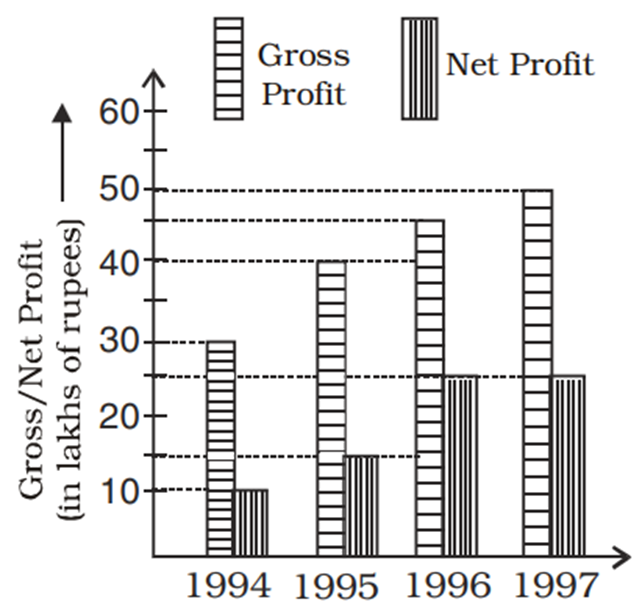
प्रश्न और उत्तर का अभ्यास करें

प्र:

निर्देश: नीचे दिए गए प्रश्नों में तीन कथन दिए गए हैं जिसके बाद दो निष्कर्ष I और II दिए गए हैं। आपको दिए गए कथनों को सत्य मानना है, भले ही वे सामान्यतः ज्ञात तथ्यों से भिन्न प्रतीत होते हो। सभी निष्कर्षों को पढ़िए और फिर तय कीजिए कि दिए गए निष्कर्षों में से कौन-सा निष्कर्ष सामान्यतः ज्ञात तथ्यों की अवहेलना किए बिना दिए गए कथनों का तार्किक रूप से अनुसरण करता है।

कथन 

1. सभी सोना चाँदी है।
 2. कुछ कांस्य सोना है।
 3. कुछ तांबा चाँदी है।

निष्कर्ष 

I. कुछ ताँबा सोना है। 
 II. सभी कांस्य ताँबा है।

523 0

  • 1
    केवल निष्कर्ष I अनुसरण करता है।
    सही
    गलत
  • 2
    केवल निष्कर्ष II अनुसरण करता है।
    सही
    गलत
  • 3
    निष्कर्ष I और II दोनों अनुसरण करते हैं।
    सही
    गलत
  • 4
    न तो निष्कर्ष I और न ही II अनुसरण करता है।
    सही
    गलत
  • 5
    या तो निष्कर्ष I या II अनुसरण करता है।
    सही
    गलत
  • उत्तर देखेंउत्तर छिपाएं
  • Workspace

उत्तर : 4. "न तो निष्कर्ष I और न ही II अनुसरण करता है।"

  • उत्तर देखेंउत्तर छिपाएं
  • Workspace

उत्तर : 4. "Both (II) and (III) are correct"

प्र:

Read the following passage and answer the questions given after it.

The giraffe is the tallest land mammal alive, its long legs and neck contributing to its impressive stature. Males can be up to 18ft (5.5m tall), females a little less.

In the wild, these beautiful creatures stretch their necks beyond those of antelope, kudu and even elephants to strip leaves from the untouched upper reaches of trees. The French zoologist Jean-Baptiste Lamarck is usually credited as the first person to suggest that long necks have evolved in giraffes because they allow them to get to the parts other herbivores cannot reach.

As the giraffe lives "in places where the soil is nearly always arid and barren, it is obliged to browse on the leaves of trees and to make constant efforts to reach them," he wrote in his 1809 book ‘Philosophie Zoologique’. "From this habit long maintained in all its race, it has resulted that the animal's fore-legs have become longer than its hind legs, and that its neck is lengthened."

The English naturalist Charles Darwin also thought the giraffe's extraordinary legs and neck must have something to do with foraging. "The giraffe, by its lofty stature, much elongated neck, fore-legs, head and tongue, has its whole frame beautifully adapted for browsing on the higher branches of trees," he wrote in ‘On the Origin of Species’ in 1859. In short, giraffes' long necks are the result of generation upon generation of repeated stretching and inheritance.

During the dry season when feeding competition should be most intense giraffe generally feed from low shrubs, not tall trees. What's more, giraffes feed most often and faster with their necks bent

Male giraffes often fight for access to females, a ritual referred to as "necking". The rivals stand flank to flank, then start to whack each other with their heads. The top or back of the well-armoured skull is used as a club to strike the neck, chest, ribs, or legs of the opponent with a force capable of knocking a competitor off balance or unconscious. The largest males usually win these battles and do most of the breeding, says zoologist Anne Innis Dagg of the University of Waterloo in Ontario, Canada, who has been studying giraffes since the 1950s. "The other giraffes don't get much breeding opportunity." There is also evidence that females are more receptive to advances from larger males.

According to the passage, ‘necking’ is the:

522 0

  • 1
    repeated stretching of the neck
    सही
    गलत
  • 2
    elongation of the giraffes’ neck
    सही
    गलत
  • 3
    breeding by the largest males
    सही
    गलत
  • 4
    fight to woo the females
    सही
    गलत
  • उत्तर देखेंउत्तर छिपाएं
  • Workspace

उत्तर : 4. "fight to woo the females"

  • उत्तर देखेंउत्तर छिपाएं
  • Workspace

उत्तर : 2. "Only B"

प्र:

Directions: Read the passage given below and answer the questions that follow by choosing the correct/most appropriate options:

Coffee was first discovered in Eastern Africa in an area we know today as Ethiopia. A popular legend refers to a goat herder by the name of Kaldi, who observed his goats acting unusually friskily after eating berries from a bush. Curious about this phenomenon, Kaldi tried eating the berries himself. He found that these berries gave him _______ energy. The news of this energy-loaded fruit quickly moved throughout the region. Coffee berries were transported from Ethiopia to the Arabian Peninsula and were first cultivated in what today is the country of Yemen. Coffee remained a secret in Arabia before spreading to Turkey and then to the European continent by means of Venetian trade merchants.

Coffee was first eaten as food though later people in Arabia would make a drink out of boiling the beans for its narcotic effects and medicinal value. Coffee for a time was known as Arabian wine to Muslims who were banned from alcohol by Islam. It was not until after coffee had been eaten as a food product, a wine, and a medicine that it was discovered, probably by complete accident in Turkey, that by roasting the beans a delicious drink could be made. The roasted beans were first crushed and then boiled in water, creating an unrefined version of the beverage we enjoy today. The first coffee houses were opened in Europe in the 17th Century and in 1675, the Viennese established the habit of refining the brew by filtering out the grounds, sweetening it, and adding a dash of milk. If you were to explore the planet for coffee, you would find about 60 species of coffee plants growing wild in Africa, Malaysia, and other regions. But only about ten of them are actually cultivated. Of these ten, two species are responsible for almost all the coffee produced in the world: Coffea Arabica and Coffea Canephora (usually known as Robusta). Because of ecological differences existing among the various coffee-producing countries, both types have undergone many mutations and now exist in many subspecies.

Coffee plants need special conditions to give a satisfactory crop. The climate needs to be hot-wet or hot temperate, between the Tropic of Cancer and the Tropic of Capricorn, with frequent rains and temperatures varying from 15 to 25 Degrees C. The soil should be deep, hard, permeable, and well irrigated, with well-drained subsoil. The best lands are the hilly ones or just-tilled woods. The perfect altitude is between 600 and 1200 meters, though some varieties thrive at 2000-2200 meters. Cultivation aimed at protecting the plants at every stage of growth is needed. Sowing should be in sheltered nurseries from which, after about six months, the seedlings should be moved to plantations in the rainy season where they are usually alternated with other plants to shield them from wind and excessive sunlight.

Fill in the blank with the most appropriate word.

He found that these berries gave him _______ energy.

522 0

  • 1
    scrutinising
    सही
    गलत
  • 2
    sustainable
    सही
    गलत
  • 3
    renewed
    सही
    गलत
  • 4
    overhauled
    सही
    गलत
  • 5
    None of these
    सही
    गलत
  • उत्तर देखेंउत्तर छिपाएं
  • Workspace

उत्तर : 3. "renewed"

प्र:

'निवेश गुणक' का प्रभाव दिखता है-

522 0

  • 1
    रोजगार
    सही
    गलत
  • 2
    बचत
    सही
    गलत
  • 3
    आय
    सही
    गलत
  • 4
    उपभोग
    सही
    गलत
  • उत्तर देखेंउत्तर छिपाएं
  • Workspace

उत्तर : 3. "आय"
व्याख्या :

व्याख्या:- निवेश गुणक का अर्थ उन तत्वों से है जिनके द्वारा निवेश में वृद्धि होती है तथा निवेश में वृद्धि के कारण होता है। आय एवं उत्पादन में वृद्धि होती है। अतः उपरोक्त विकल्पों के अनुसार 'निवेश गुणक' का प्रभाव आय पर दर्शाया गया है

प्र:

ΔABC ~ ΔPQR है। ΔABC और ΔPQR के परिमाप क्रमशः 72 सेमी और 43.2 सेमी है। ΔABC के क्षेत्रफल और ΔPQR के क्षेत्रफल का अनुपात क्या है?

521 0

  • 1
    25 ∶ 9
    सही
    गलत
  • 2
    36 ∶ 25
    सही
    गलत
  • 3
    9 ∶ 4
    सही
    गलत
  • 4
    16 ∶ 9
    सही
    गलत
  • उत्तर देखेंउत्तर छिपाएं
  • Workspace

उत्तर : 1. "25 ∶ 9 "

  • उत्तर देखेंउत्तर छिपाएं
  • Workspace

उत्तर : 3. "37.5% "

      त्रुटि की रिपोर्ट करें

    कृपया संदेश दर्ज करें
    त्रुटि रिपोर्ट सफलतापूर्वक जमा हुई

      त्रुटि की रिपोर्ट करें

    कृपया संदेश दर्ज करें
    त्रुटि रिपोर्ट सफलतापूर्वक जमा हुई

      त्रुटि की रिपोर्ट करें

    कृपया संदेश दर्ज करें
    त्रुटि रिपोर्ट सफलतापूर्वक जमा हुई

      त्रुटि की रिपोर्ट करें

    कृपया संदेश दर्ज करें
    त्रुटि रिपोर्ट सफलतापूर्वक जमा हुई

      त्रुटि की रिपोर्ट करें

    कृपया संदेश दर्ज करें
    त्रुटि रिपोर्ट सफलतापूर्वक जमा हुई

      त्रुटि की रिपोर्ट करें

    कृपया संदेश दर्ज करें
    त्रुटि रिपोर्ट सफलतापूर्वक जमा हुई

      त्रुटि की रिपोर्ट करें

    कृपया संदेश दर्ज करें
    त्रुटि रिपोर्ट सफलतापूर्वक जमा हुई

      त्रुटि की रिपोर्ट करें

    कृपया संदेश दर्ज करें
    त्रुटि रिपोर्ट सफलतापूर्वक जमा हुई