


Practice Question and Answer
8Q: मैंगनीज के उत्पादन में भारत का दूसरा स्थान है, प्रथम देश कौन सा है ? 2982 05cd942fbee05f254c7e76dab
5cd942fbee05f254c7e76dab- 1फ्रांसfalse
- 2रुसी संघtrue
- 3कनाडाfalse
- 4संयुक्त राज्य अमेरिकाfalse
- Show AnswerHide Answer
- Workspace
- SingleChoice
Answer : 2. "रुसी संघ"
Q: A, B, C, D, E, F, G और H केंद्र के सामने एक चक्र के चारों ओर बैठे हैं। B, A के दाईं ओर तीसरा है, जो C के दाईं ओर तीसरा है। F, E के दायें से दूसरा है, जो B का निकटतम पडोसी नहीं है, D,H के बांये से दूसरा है जो कि G के बांये से दूसरा है। F के संबंध में H की स्थिति क्या है?
2982 05d2eb590650ce2664b81da7c
5d2eb590650ce2664b81da7c- 1तुरन्त दांयेfalse
- 2बांये से तीसराfalse
- 3बांये से दूसराfalse
- 4दांये से दूसराfalse
- 5बांये से तीसराtrue
- Show AnswerHide Answer
- Workspace
- SingleChoice
Answer : 5. "बांये से तीसरा"
Explanation :
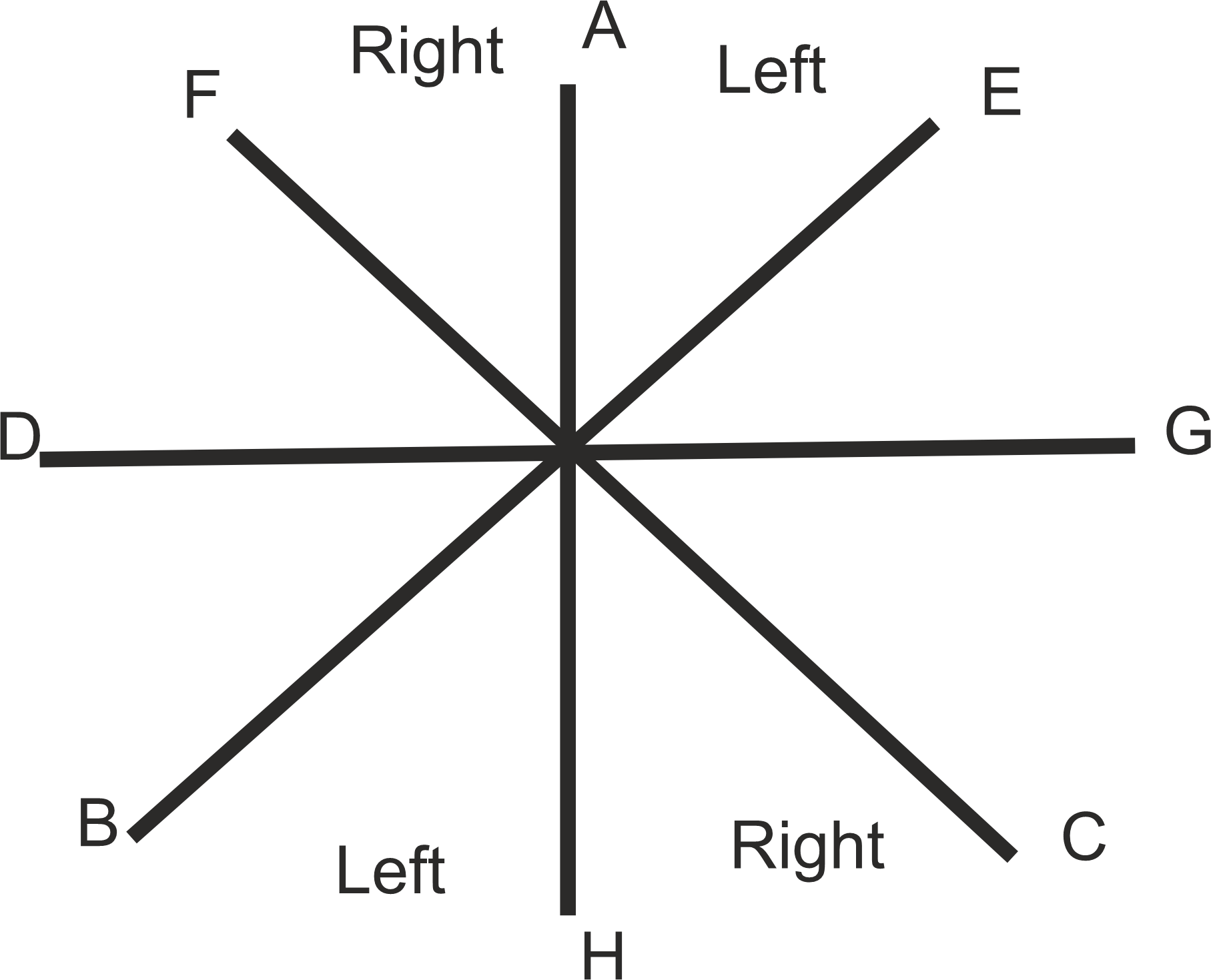
Q: किसी त्रिभुज की तीन भुजाएं 6 सेमी., 8 सेमी. तथा 10 सेमी हैं। उसकी सबसे बड़ी भुजा पर माध्यिका की लम्बाई ज्ञात करें?
2981 05d777bc8e871b064d456bece
5d777bc8e871b064d456bece- 18 cmfalse
- 26 cmfalse
- 35 cmtrue
- 44.8 cmfalse
- Show AnswerHide Answer
- Workspace
- SingleChoice
Answer : 3. "5 cm"
Q: पांच दोस्त उत्तर की ओर मुख कर के एक बेंच पर बैठे है। अंकित अंजुम के ठीक दाहिने बैठा है। अमित प्रिया के बाईं ओर बैठा है और राम के ठीक दाहिने ओर बैठा है। राम अंकित के दाहिने बैठा है। सबसे दाहिने छोर पर कौन बैठा है?
2981 05ed74f0722579c390050c6ae
5ed74f0722579c390050c6ae- 1अंजुमfalse
- 2अमितfalse
- 3अंकितfalse
- 4प्रियाtrue
- Show AnswerHide Answer
- Workspace
- SingleChoice
Answer : 4. "प्रिया"
Q: एक व्यक्ति 16224 के नगद भुगतान तथा दो अन्य उतनी ही धन राशि की वार्षिक किस्तें अगले दो वर्षों में देने के वायदे के साथ एक स्कूटर खरीदता है। यदि ब्याज की वार्षिक दर 4% जबकि ब्याज वार्षिक रूप से संयोजित है, तो स्कूटर का नकद भुगतान मूल्य
2980 05f16a03b97cc6b353bf3b316
5f16a03b97cc6b353bf3b316- 1Rs. 46000false
- 2Rs. 50000false
- 3Rs. 40000false
- 4Rs. 46824true
- Show AnswerHide Answer
- Workspace
- SingleChoice
Answer : 4. "Rs. 46824 "
Q: 24:27 = ? :: 81
2980 05f101e6d2d9085055f467c9e
5f101e6d2d9085055f467c9e- 172true
- 282false
- 38false
- 462false
- Show AnswerHide Answer
- Workspace
- SingleChoice
Answer : 1. "72"
Q:Direction (1-6): Read the passage carefully then answer the questions given below.
People have long circulated news via word-of-mouth, and as language evolved into writing and literacy – and governments played larger roles in people’s lives – sharing information became a necessity. However, disseminating news and information on paper presented significant challenges. When each copy had to be handwritten, mass distribution was impossible. They were first chiseled in stone or metal; later, they were handwritten and distributed in public forums or read from scrolls by town criers. Though both ancient Romans and Chinese – as well as other ancient civilizations – had early forms of news media, they do not qualify as newspapers because they could not be mass-distributed.
The first true newspapers arrived after Johannes Gutenberg introduced his movable type printing press to the European world around 1440. Though printing presses with movable type had existed in eastern Asia for around two centuries, they never made it to Europe; furthermore, Gutenberg’s version made it significantly faster to mass produce documents. By 1500, the printing press had made its way throughout Europe, and news sheets (or news books) were mass-distributed.
The first weekly newspaper was published in Germany by Johann Carolus in 1604. Called Relation aller Fürnemmen und gedenckwürdigen Historien, the publication satisfied the four tenets of a “true” newspaper: Accessibility by the public, Published at a regular interval (daily, weekly, monthly, etc.) ,Information is current ,Covers a variety of topics (politics, events, entertainment, sports, etc.) Despite meeting the requirements for a newspaper, there is some debate as to whether The Relation qualifies as the world’s first newspaper since it was printed in quarto, not folio, size. It’s worth noting the World Association of Newspapers considers The Relation the first true newspaper.’
Other German newspapers followed, and in 1618 the world’s first broadsheet newspaper printed in folio size was published in Amsterdam, called Courante uyt Italien, Duytslandt, &c. The newspaper format soon spread throughout Europe, with newspapers published in Spain, France, and Sweden. The first English newspaper was published in 1665 in Oxford, England. Known as the Oxford Gazette, the newspaper moved to London in 1666 and was renamed the London Gazette. It’s still being published today. Soon after, the newspaper became a staple in all major European countries. It then made its way to the New World.
Which of the following options is satisfying the condition for being a tenant of a “true newspaper”?
2980 06038cb7b24cd273bc4f9c106
6038cb7b24cd273bc4f9c106People have long circulated news via word-of-mouth, and as language evolved into writing and literacy – and governments played larger roles in people’s lives – sharing information became a necessity. However, disseminating news and information on paper presented significant challenges. When each copy had to be handwritten, mass distribution was impossible. They were first chiseled in stone or metal; later, they were handwritten and distributed in public forums or read from scrolls by town criers. Though both ancient Romans and Chinese – as well as other ancient civilizations – had early forms of news media, they do not qualify as newspapers because they could not be mass-distributed.
The first true newspapers arrived after Johannes Gutenberg introduced his movable type printing press to the European world around 1440. Though printing presses with movable type had existed in eastern Asia for around two centuries, they never made it to Europe; furthermore, Gutenberg’s version made it significantly faster to mass produce documents. By 1500, the printing press had made its way throughout Europe, and news sheets (or news books) were mass-distributed.
The first weekly newspaper was published in Germany by Johann Carolus in 1604. Called Relation aller Fürnemmen und gedenckwürdigen Historien, the publication satisfied the four tenets of a “true” newspaper: Accessibility by the public, Published at a regular interval (daily, weekly, monthly, etc.) ,Information is current ,Covers a variety of topics (politics, events, entertainment, sports, etc.) Despite meeting the requirements for a newspaper, there is some debate as to whether The Relation qualifies as the world’s first newspaper since it was printed in quarto, not folio, size. It’s worth noting the World Association of Newspapers considers The Relation the first true newspaper.’
Other German newspapers followed, and in 1618 the world’s first broadsheet newspaper printed in folio size was published in Amsterdam, called Courante uyt Italien, Duytslandt, &c. The newspaper format soon spread throughout Europe, with newspapers published in Spain, France, and Sweden. The first English newspaper was published in 1665 in Oxford, England. Known as the Oxford Gazette, the newspaper moved to London in 1666 and was renamed the London Gazette. It’s still being published today. Soon after, the newspaper became a staple in all major European countries. It then made its way to the New World.
- 1A newspaper which was printed in quarto, not folio, sizefalse
- 2A newspaper which covers historic developments leading to various events.false
- 3A newspaper which is accessible to only Asian readers.false
- 4A newspaper which was published once in a month.true
- 5A newspaper which is printed in press and is not handwrittenfalse
- Show AnswerHide Answer
- Workspace
- SingleChoice
Answer : 4. "A newspaper which was published once in a month. "
Q: Dead sea is located between which two countries 2980 05d14566917aaf762d5b34f26
5d14566917aaf762d5b34f26- 1Jordan and Sudanfalse
- 2Jordan and Israeltrue
- 3Turkey and UAEfalse
- 4UAE and Egyptfalse
- Show AnswerHide Answer
- Workspace
- SingleChoice